
Help for Substance Use in Young Men Across Ontario
You knew it was getting worse before anyone said anything. The weekend habit crept into weeknights. The thing that used to take the edge off started running the show. Now you're covering for it, planning around it, and telling yourself you'll stop soon. If you're a young man in Ontario looking for help for substance use, you already know something has to change.

What this actually looks like day to day
It rarely starts as a crisis. It starts as a way to get through.
Maybe drinking or using is how you shut off a racing mind at night. Maybe it's the only time the pressure lifts, or the only way you feel like yourself around other people. It works, for a while. That's when the reality of the situation becomes clear.
Then the costs start stacking up. You're tired in a way sleep doesn't fix. Money disappears. You skip things you used to care about, or show up and feel absent. Small lies pile on top of each other to keep it hidden.
The people close to you have noticed. Your parents ask questions that turn into arguments. A partner keeps a distance you can feel. You tell them it's under control because saying anything else feels like losing.
Underneath all of it, there's usually something you've never said out loud. Stress you can't name. Anxiety that won't quit. Pain you've been carrying so long it feels normal.
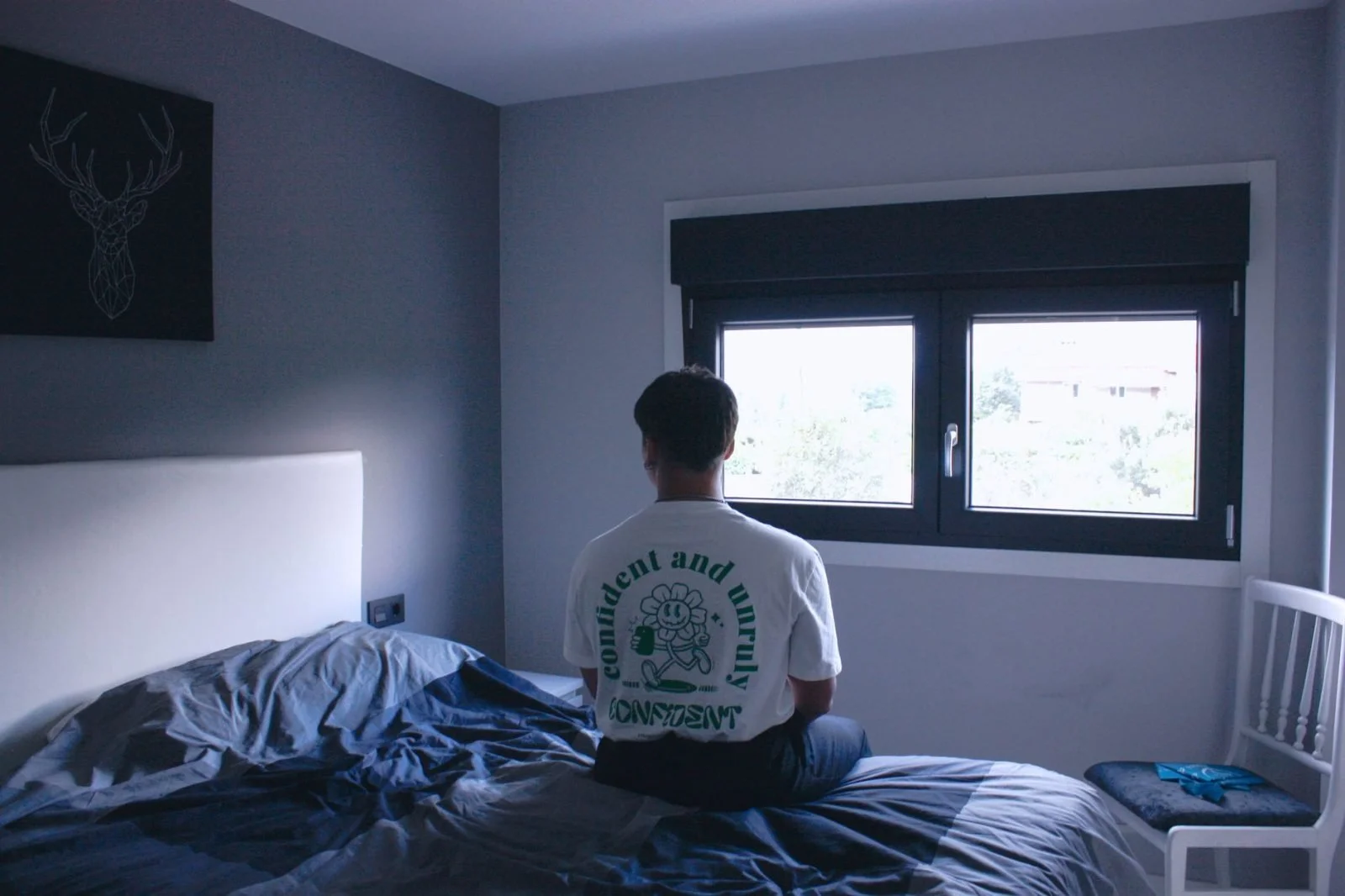
Why the substance is usually the smaller half of the story
Substance use is a coping strategy. It's how you've been managing something that hurts. That's the honest starting point at Wayfinder, and it changes how the work goes.
Ted Boyle, who leads this work, has been where you are. He's a Registered Social Worker and a recovered alcoholic, sober since 2019. He built his practice around young men because he knows how isolating this gets and how useless it feels to be told to just stop.
The question that matters isn't only 'how do I quit.' It's 'what am I trying to escape, and why.' Answering that makes the substance lose its grip, beyond what willpower alone can achieve.
For many young men, substance use is tangled up with stress, pressure, and unspoken pain, which is why individual therapy focuses on what's driving the behaviour rather than just the behaviour itself. The work reaches into relationships, identity, anxiety, and the pressure to hold everything in and never look weak.
This isn't about softening you up. It's about showing up with more honesty and clarity than you have to spare when the substance is calling the shots. Ted draws on proven methods like CBT, DBT, and IFS, and on Stoic ideas about wisdom, courage, and self-control that hold real weight.
Sessions are virtual and available across Ontario. That means no waiting room, no commute, and no one from your town seeing you walk in.

Common questions
Do I have to be ready to quit completely before I start?
No. You can start while you're still unsure, still using, or still not convinced therapy is for you. The first conversation is just getting to know each other, with no commitment and no deep dive into the hardest material. Your goals shape the work, not someone else's rules about what recovery has to look like.
Will I be judged or forced into anything?
No. There's no drug testing here, no involuntary treatment, and no lectures. Ted talks to young men the way he'd want to be talked to when he was struggling: direct, honest, and without shame. If your situation requires more intensive support than virtual sessions, he will tell you directly and guide you to more suitable options.
I've tried to stop before and it didn't work. Is this any different?
Yes, because the goal isn't just stopping. Plenty of young men arrive after trying to quit on their own and feeling like failures for it. Real change usually includes setbacks, and that's part of the process, not proof you can't do it. The difference is working out what's fuelling the need to escape, so the change actually holds.
The next step
You don't have to figure this out alone, and you don't have to have the words for all of it yet. Many families reach out after realizing their son needs more than a talk, and working with an addiction therapist for young men in Toronto can be the first step toward real change.
The first step is a free 20-minute call. No pressure, no obligation to continue if it doesn't feel like the right match. You can book through the contact form, or call or text (647) 289-1505.
If you bring honesty and a willingness to try, real change is possible. Reach out when you're ready. Let's get to work.