
Anxiety Therapy for Men in Toronto
Clear, Practical Support
Anxiety therapy for men in Toronto helps you identify what keeps your mind and body on alert, then build practical ways to respond before worry, panic, irritability, or avoidance takes over. Sessions are available virtually across Ontario for teens, young adults, and adults dealing with generalized anxiety, social anxiety, panic, and anxiety connected to trauma or substance use. Every Wayfinder clinician holds at least a master’s degree, and a free 20-minute consultation is available before you book.
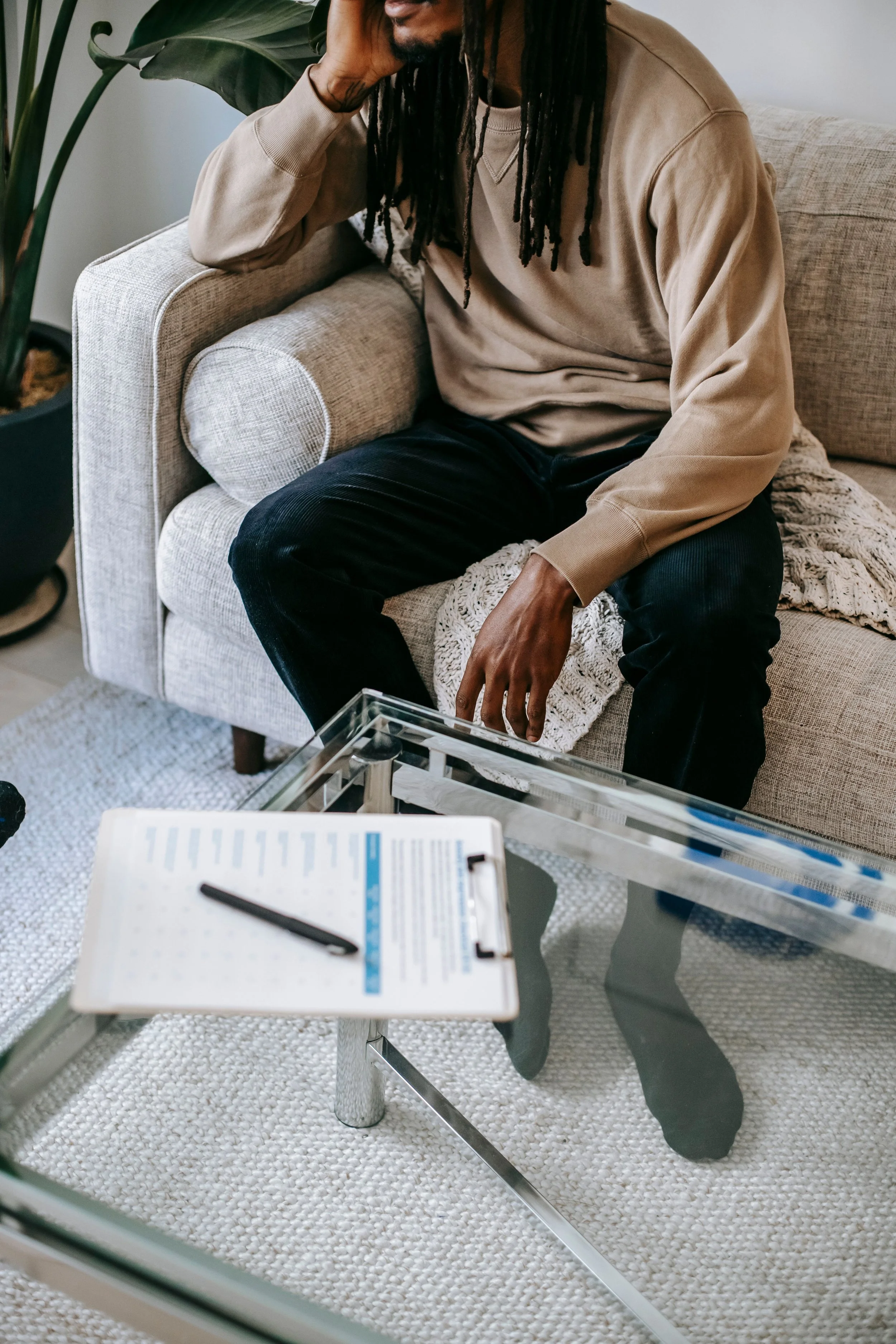
What does anxiety look like in men
Anxiety in men often shows up as overthinking, a short temper, trouble sleeping, constant problem-solving, or the need to stay in control. You may feel tense without calling it fear, replay conversations for hours, or avoid situations where you could look unprepared.
The useful question is what happens next. Anxiety becomes more disruptive when it changes your decisions, narrows your routine, or pushes you toward habits that give short relief and create a larger problem later.
Through individual therapy, the pattern can be mapped from trigger to thought, body reaction, action, and consequence. That sequence reveals where a different response can begin.
Why does anxiety keep returning even when life is going well?
Anxiety can continue because the brain learns from avoidance. Each time you escape a conversation, cancel a plan, check for reassurance, or control every detail, the immediate relief teaches your nervous system that the situation was dangerous.
This is why insight alone may not stop the cycle. Progress often begins when you notice the alarm earlier and practise staying present long enough for your brain to learn that discomfort can rise and fall without taking over.
Men who want direct language and practical goals may also find that therapy designed for men fits the way they prefer to work. Sessions can focus on a concrete problem without forcing every concern into emotional language that feels unnatural.
Can anxiety cause anger, irritability, or shutdown?
Yes. Anxiety can create anger, irritability, or shutdown when the body has been preparing for threat for too long. A minor delay can feel intolerable, a question can sound like criticism, or a difficult conversation can leave you unable to respond.
Therapy tracks what happens in the seconds before the reaction. The first change may be recognizing jaw tension, faster speech, mental blankness, or the urge to leave before the reaction reaches full force. When those reactions connect to earlier experiences that still feel active, trauma therapy for men can address the source rather than repeatedly managing the same trigger.
What happens when alcohol becomes the quickest way to calm down?
Alcohol can quiet physical tension and racing thoughts quickly, which makes it easy for the brain to repeat the behaviour. The problem grows when the next-day anxiety, sleep disruption, regret, or loss of control increases the same distress you were trying to reduce.
Understanding the anxiety and drinking loop helps separate the trigger, the expected relief, and the consequences. Therapy can then work on the anxiety and the coping pattern together instead of treating them as unrelated concerns.
Early progress may look like delaying the first drink, noticing the urge sooner, changing the setting where the pattern starts, or using a strategy that does not create more anxiety the next morning.
Related Questions
How does anxiety therapy for men work?
Treatment begins with the situations affecting your week, the responses you rely on, and what those responses cost you. Sessions may draw from CBT, DBT, mindfulness-based practice, IFS, or EMDR according to your goals and what keeps the pattern going.
The different training and specialties across our clinical team make it possible to match you with a clinician whose approach fits the problem you are bringing in. Therapy stays collaborative and focused on changes you can test between sessions.
For clients in Toronto, virtual care also means the work happens in the same environment where work pressure, relationship conflict, sleep problems, and coping habits occur. That makes it easier to examine the pattern as it actually unfolds.
How much does anxiety therapy cost?
Individual therapy is $175 for a 50-minute virtual session. EMDR therapy is $220 for 50 minutes when EMDR is part of the treatment plan. The clinic is private pay and provides receipts that you can submit to an extended health plan, with reimbursement determined by your plan.
Is virtual anxiety therapy available outside Toronto?
Yes. Virtual anxiety therapy is available across Ontario, so you do not need to live in Toronto to attend. You need a private place, a reliable internet connection, and enough privacy to speak openly during the session.
Do I need to know exactly what is causing my anxiety?
No. You can begin with what is happening now, even if you cannot explain where it started. The first sessions organize the symptoms, triggers, coping responses, and impact on your life before deciding what needs the most attention.
How do we take the next step?
A free 20-minute consultation gives your family a chance to describe what is happening, ask who should attend, and decide whether the therapist’s approach fits the situation. No credit card is required, and the call does not commit anyone to therapy.